Family businesses are different. Decisions get made in the kitchen, in the truck, after church. The CRM market wasn't built for that. AeyeCRM was.
If you're a second- or third-generation owner trying to put structure around a business that's run on trust and memory for thirty years, you don't need another piece of software. You need a system that respects what's already working while making it easier to hand off when the time comes.
Why family businesses need a different CRM approach
Most CRM advice assumes a sales team of strangers competing for commission. Family businesses run on the opposite: long relationships, generational knowledge, and a leader who knows every customer by name. The problem isn't the relationships — it's that they all live in one person's head.
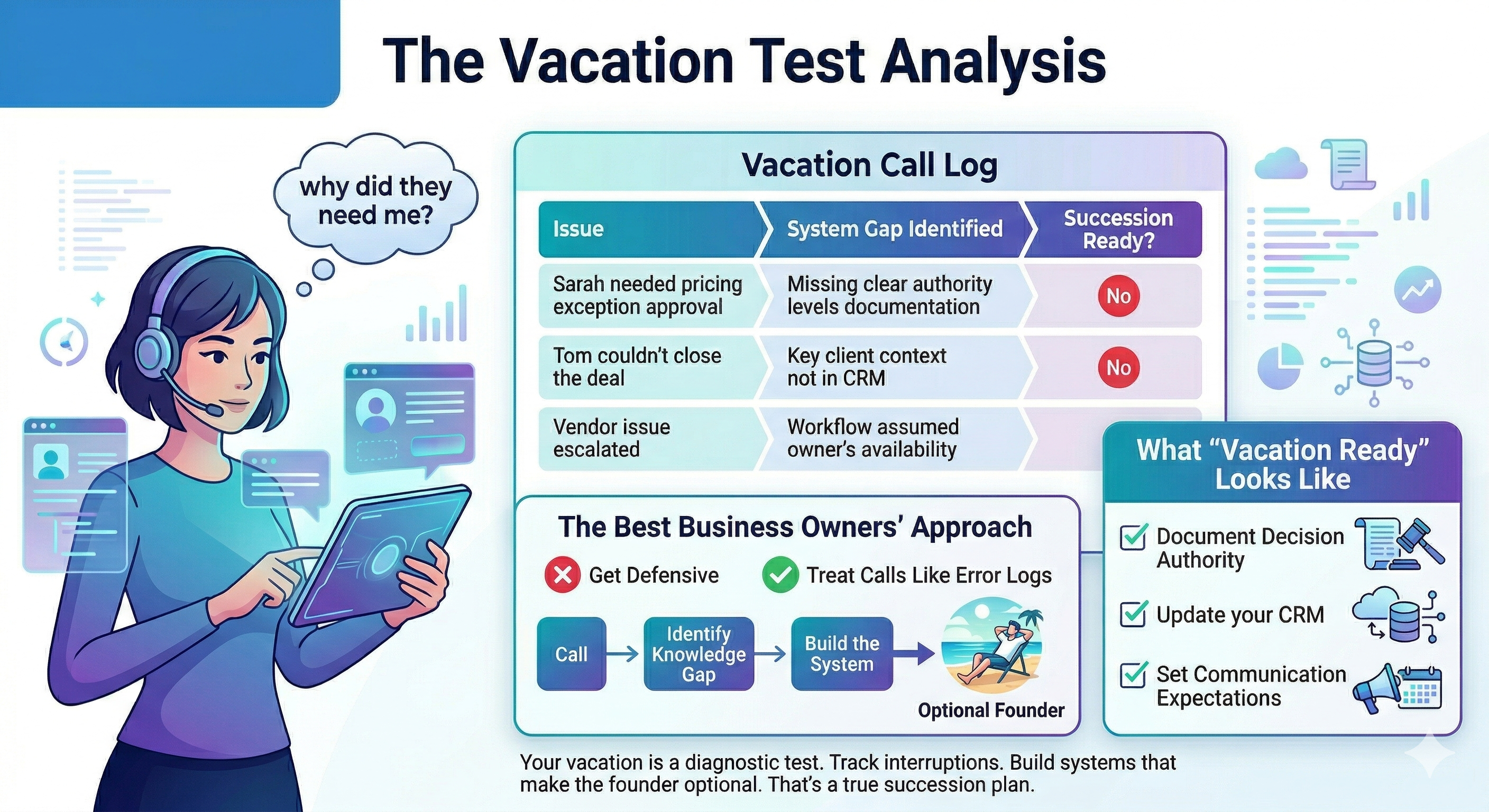
When the founder retires, takes a vacation, or gets sick, the business slows down. That's not a relationship problem. That's a systems problem.
Who we help
- Family-owned wholesalers and distributors where the next generation is taking over and needs visibility into customer history
- Multi-generation manufacturers ready to document tribal knowledge before it walks out the door
- Founder-led service businesses where the owner is the sales team, the relationship manager, and the bottleneck
- Family farms and agriculture operations juggling buyers, brokers, and seasonal cycles
- Family retail businesses with deep customer relationships and inventory complexity
- Any business preparing for succession — whether that's next year or ten years out
The SPA Method — built for family businesses
Most CRM consultants will sell you software. We sell you a method.
The AeyeCRM SPA Method (Strategy, Process, Automation) was built specifically for family businesses moving from "in my head" to "in the system." It starts with documenting the way you actually sell — not the way some Salesforce template thinks you should — and works backward into the technology.
- Strategy: What does the business look like when the founder steps back? Where are the relationships? What needs to be documented?
- Process: Map the real sales process on paper first. Identify the handoffs, the bottlenecks, the steps that only one person knows.
- Automation: Only after the strategy and process are clear do we touch the CRM. The software serves the business, not the other way around.
What makes family business CRM implementations different
- Trust before tools. Long-tenured employees don't want to "log activities." We design CRMs that capture what's needed without making people feel surveilled.
- Two-track adoption. The founder needs one view. The next generation needs another. The CRM has to serve both without forcing either to change how they work overnight.
- Documented relationships. Who introduced whom, what was promised, what the customer's spouse is named — these matter. We design the system to hold all of it.
- Succession-ready from day one. Every config decision is made with one question in mind: would this still work if the founder stepped back tomorrow?
Industries we've worked with
Family businesses come in every shape. Here are some of the industries we've helped:
Don't see your industry? We help businesses across many verticals — what matters most is that you're a family-owned or founder-led operation ready to put structure around what's working.
Where to start
If you're a family business owner thinking about CRM, succession, or just getting the chaos out of your head, the right first step isn't a sales call — it's a self-assessment.
Take the Succession Scorecard. Ten minutes, no email gate, and you'll get a clear read on where your business sits on the readiness curve.
When you're ready to talk, book a 30-minute consult with Philip. We'll talk through where you are and what the next move looks like — no pressure, no pitch deck.
Frequently asked questions
Do you only work with family businesses?
Family businesses are our specialty, but the SPA Method works for any small or mid-sized business where one person holds too much of the knowledge. If that's you, we can help.
Which CRM do you implement?
Salesforce is our primary platform. We also implement HubSpot for businesses where Salesforce is overkill. The right choice depends on your team, your budget, and your roadmap — we'll help you decide.
How long does an implementation take?
Typical family business implementations run 6–12 weeks from kickoff to go-live. Larger or more complex builds (multiple integrations, custom development, multi-region rollouts) take longer. We scope every project up front so there are no surprises.
What does it cost?
Implementations start at $3K and scale based on scope. Use our SOW Calculator to build a ballpark estimate, or book a consult and we'll walk through it together.
What if our family isn't sure we're ready?
Most aren't. That's exactly what the Succession Scorecard is for — to give you a clear, honest read before anyone signs anything.