
CRM Software for Manufacturing Industry
Align Sales, Production, and Forecasting in One System
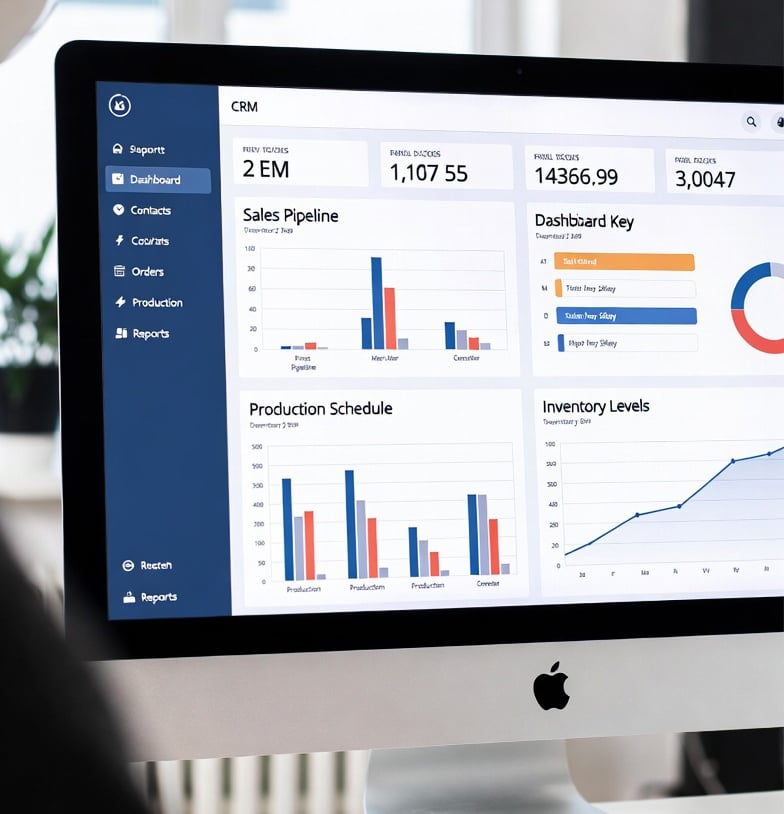
CRM software for the manufacturing industry helps businesses manage customer relationships, sales pipelines, and order workflows while aligning them with production and inventory systems. This improves forecasting accuracy, reduces delays, and enables better operational coordination across teams.
Key Takeaways
- Centralizes customer, sales, and production data
- Improves demand forecasting and planning
- Aligns sales with manufacturing capacity
- Reduces manual errors and communication gaps
- Supports long-term customer relationships
Why Do Manufacturing Companies Need CRM?
Manufacturing companies need CRM to manage complex sales cycles, track custom orders, and align sales with production. It improves cross-team communication, provides real-time visibility into demand, and reduces delays caused by manual processes.
How Manufacturing CRM Systems Work
Modern manufacturing CRM systems connect front-end sales processes with back-end operations.
Core Capabilities:
- Lead and opportunity management
- Quote and order tracking
- Workflow automation
- ERP and inventory integration
- Reporting and analytics
Features vs Benefits of Manufacturing CRM Systems
| Feature | Benefit |
ERP Integration |
Real-time visibility into production and inventory |
Workflow Automation |
Faster approvals and reduced manual work |
Centralized Data |
Improved team collaboration |
Forecasting Tools |
Accurate demand planning |
Custom Workflows |
Support for complex manufacturing processes |
Best CRM for Manufacturing Business: Top Options
Choosing the best CRM for manufacturing business depends on your operational needs, scalability, and integration requirements.
Popular CRM platforms include:
- Salesforce CRM – Highly customizable and scalable for large manufacturers
- HubSpot CRM – User-friendly with strong automation for growing teams
- Zoho CRM – Cost-effective with solid integration capabilities
The best CRM is one that aligns with your production workflows, not just features.
Best CRM for Small Manufacturing Business
Small manufacturers need simplicity and scalability.
Key Requirements:
- Easy implementation
- Affordable pricing
- Basic automation
- Clear dashboards
A CRM for small manufacturing businesses should:
- Reduce manual tracking
- Improve customer follow-ups
- Scale as operations grow
Real-World Use Case
A custom equipment manufacturer handling multiple quote revisions can use CRM to:
- Track customer requirements
- Manage approval workflows
- Align production schedules with confirmed orders
This reduces delays and improves customer satisfaction.
How CRM Software Improves Forecasting in Manufacturing
Accurate forecasting is critical in manufacturing.
CRM software helps by:
- Centralizing pipeline data
- Identifying high-value opportunities
- Aligning sales forecasts with production capacity
- Reducing overproduction or stock shortages
CRM vs ERP for Manufacturing: What’s the Difference?
| CRM | ERP |
Manages customer relationships |
Manages operations and resources |
Tracks sales and pipelines |
Handles inventory, finance, production |
Focuses on front-end processes |
Focuses on back-end processes |
Best practice: Integrate CRM with ERP for complete visibility.
How to Choose the Right Manufacturing CRM
Consider these factors:
1. Business Size
- Small → Simple CRM
- Large → Advanced, customizable CRM
2. Complexity of Operations
- Custom orders → Need flexible workflows
- Standard products → Basic CRM works
3. Integration Needs
- ERP compatibility is critical
4. Scalability
- Choose a CRM that grows with your business
How to Implement CRM in Manufacturing
- Define your sales and production workflows
- Choose a CRM aligned with your processes
- Integrate with ERP and inventory systems
- Customize pipelines and dashboards
- Train your team for adoption
- Monitor performance and optimize
Industry Use Cases for Manufacturing CRM
- Automotive manufacturing
- Industrial equipment production
- Custom fabrication businesses
- Electronics manufacturing
- Consumer goods manufacturing
Why Choose AeyeCRM for Manufacturing CRM Implementation
AeyeCRM, LLC helps manufacturers implement CRM systems tailored to their operational needs.
Key Advantages:
- Process-driven CRM implementation
- Custom workflows aligned with production
- Seamless ERP integration
- Advanced reporting and forecasting
- Long-term system scalability
Strengthen Your Manufacturing Operations with CRM
A well-implemented CRM software for the manufacturing industry enables businesses to:
- Improve customer relationship management
- Streamline sales processes
- Enhance forecasting accuracy
- Align sales with production
Whether you are a large enterprise or a small manufacturing business, the right CRM creates a strong foundation for scalable growth and operational efficiency.
Ready to Optimize Your Manufacturing Operations?
Implement a CRM system that aligns sales, production, and customer relationships.
Book a consultation with AeyeCRM today and transform your manufacturing workflows.
What is CRM software for the manufacturing industry?
What is the best CRM for manufacturing business?
Do small manufacturing businesses need CRM?
How does CRM improve efficiency in manufacturing?
CRM connects sales, production, and operations, reducing delays and improving coordination across teams.
.svg)