CRM Solutions Built for Agriculture Businesses
Manage Farming Operations, Sales, and Relationships in One System
CRM for agriculture helps farmers and agribusinesses manage customer relationships, track sales, streamline operations, and improve forecasting. By centralizing data across farming, distribution, and customer interactions, CRM software enables better decision-making, improved efficiency, and long-term growth.
Key Takeaways
- Centralizes farm operations, customer data, and sales pipelines
- Improves planning, forecasting, and resource management
- Enhances communication with buyers, suppliers, and distributors
- Reduces manual work through automation
- Supports scalability for growing agribusinesses
How CRM Software Helps Agriculture Businesses?
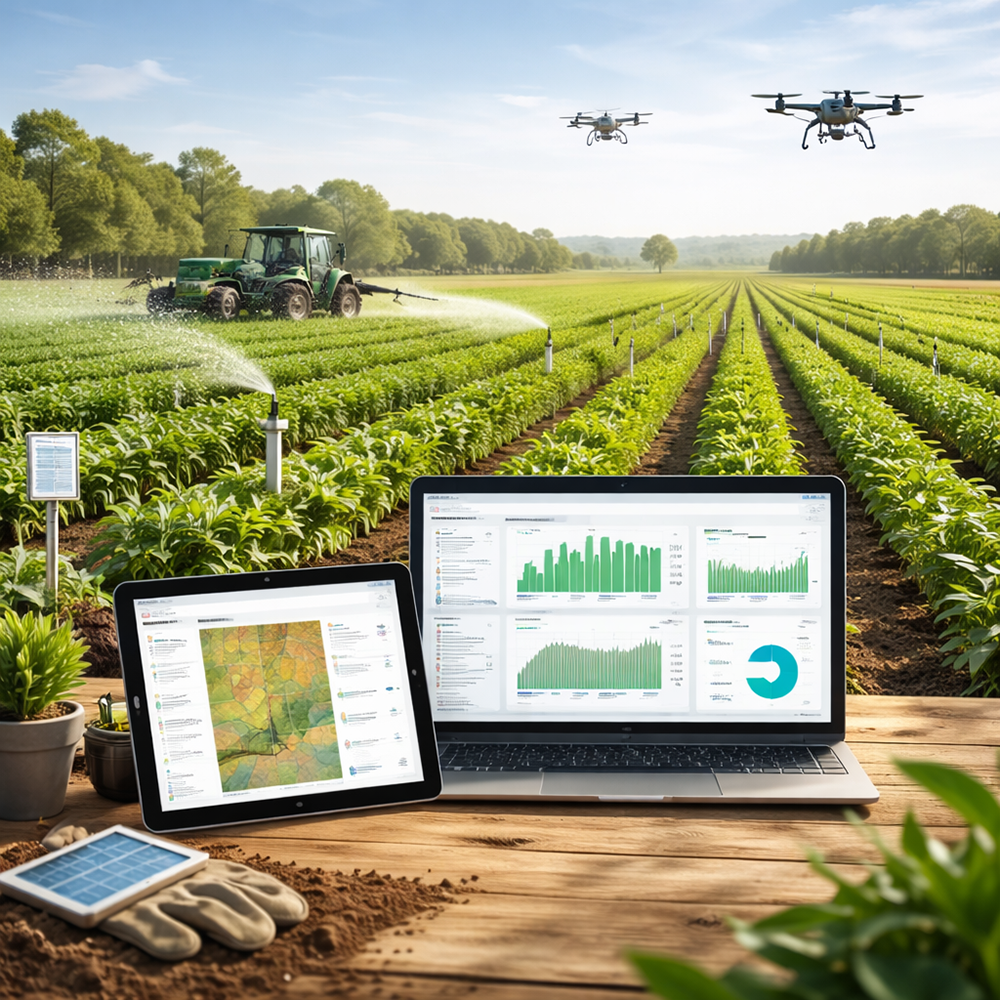
CRM software for agriculture is a system that helps farmers and agribusinesses manage customer relationships, track sales, and coordinate operations such as crop planning, distribution, and forecasting in one centralized platform.
Why CRM Software for Agriculture Is Important
Agriculture businesses operate in a highly dynamic environment influenced by weather, demand cycles, and supply chain challenges. Managing these variables manually can lead to inefficiencies and missed opportunities.
A CRM for agriculture helps:
- Track buyers, distributors, and suppliers in one place
- Improve communication across the supply chain
- Align production with market demand
- Reduce delays in order processing and delivery
- Maintain long-term relationships with customers
How CRM for Farmers Improves Daily Operations
Farmers often rely on fragmented systems or manual processes to manage operations. CRM for farmers simplifies daily tasks by bringing everything into a single platform.
Key Benefits for Farmers:
- Track crop sales and customer orders
- Manage contacts, buyers, and vendors
- Schedule follow-ups and deliveries
- Monitor seasonal demand trends
- Maintain records for compliance and reporting
This allows farmers to focus more on production while improving business efficiency.
CRM for Agri Business: Managing End-to-End Operations
Agribusinesses deal with complex ecosystems involving production, distribution, and sales. CRM for agri business helps manage these processes seamlessly.
Core Capabilities:
- Lead and opportunity management
- Sales pipeline tracking
- Inventory and distribution coordination
- Workflow automation
- Reporting and analytics
By integrating these functions, CRM systems eliminate silos and improve operational transparency.
Features vs Benefits of CRM Software for Agriculture
| Feature | Benefit |
Centralized Customer Data |
Better relationship management |
Sales Pipeline Tracking |
Improved revenue visibility |
Workflow Automation |
Reduced manual tasks |
Reporting & Analytics |
Data-driven decision-making |
Integration Capabilities |
Seamless operations across systems |
Real-World Use Case
An agribusiness supplying produce to multiple distributors can use CRM software for agriculture to:
- Track orders from different buyers
- Forecast demand based on past sales
- Coordinate logistics and deliveries
- Maintain consistent communication with clients
This results in better planning, reduced waste, and improved customer satisfaction.
How CRM Software Improves Forecasting in Agriculture
Forecasting plays a critical role in agriculture due to seasonal and demand fluctuations.
CRM software for agriculture helps by:
- Analyzing historical sales data
- Identifying buying patterns
- Aligning production with demand
- Reducing overproduction or shortages
This ensures optimal resource utilization and better profitability.
CRM for Agriculture vs Traditional Farm Management Systems
| CRM for Agriculture | Traditional Systems |
Focuses on customers and sales |
Focuses on farm operations only |
Tracks relationships and pipelines |
Limited customer insights |
Supports forecasting and analytics |
Basic reporting capabilities |
Enables automation |
Mostly manual processes |
Best practice: Combine CRM with farm management tools for complete visibility.
How to Choose the Right CRM for Agriculture
Selecting the right CRM depends on your business size, operations, and goals.
1. Type of Business
- Farmers → Simple, easy-to-use CRM
- Agribusiness → Advanced CRM with integrations
2. Operational Complexity
- Small farms → Basic features
- Large operations → Custom workflows and automation
3. Scalability
Choose a CRM that can grow with your business.
4. Integration Needs
Ensure compatibility with existing systems like accounting or inventory tools.
How to Implement CRM in Agriculture
- Identify key processes (sales, distribution, customer management)
- Select CRM software tailored to agriculture
- Customize workflows based on your operations
- Import existing data and contacts
- Train your team for adoption
- Monitor and optimize performance
Industry Use Cases
CRM for agriculture can be used across:
- Crop farming businesses
- Dairy farms
- Agri distributors and wholesalers
- Seed and fertilizer suppliers
- Export-oriented agricultural businesses
Why Choose AeyeCRM for Agriculture CRM Solutions
AeyeCRM specializes in building CRM solutions tailored to agriculture businesses.
Key Advantages:
- Custom CRM solutions designed for agricultural workflows
- Process-driven implementation for better efficiency
- Scalable systems for growing farms and agribusinesses
- Advanced reporting and forecasting capabilities
- Seamless integration with existing tools
AeyeCRM ensures that your CRM system aligns with real-world agricultural operations.
Strengthen Your Agriculture Business with CRM
A well-implemented CRM for agriculture enables businesses to:
- Improve customer relationship management
- Streamline sales and distribution processes
- Enhance forecasting accuracy
- Reduce operational inefficiencies
Whether you are an individual farmer or a large agribusiness, CRM software provides the tools needed to scale efficiently and stay competitive.
Ready to Transform Your Agriculture Business?
Implement a CRM solution that connects your operations, customers, and sales in one system.
Get in touch with AeyeCRM today to build a smarter, more efficient agriculture business.
.svg)